Why Goa is the Best Corporate Retreat Destination for Team Building in India
A corporate retreat should do more than give employees a change of scenery. The best retreats create opportunities for people to communicate differently, solve problems together, discover new strengths and build relationships beyond the workplace. This is where Goa and team building come together particularly well.
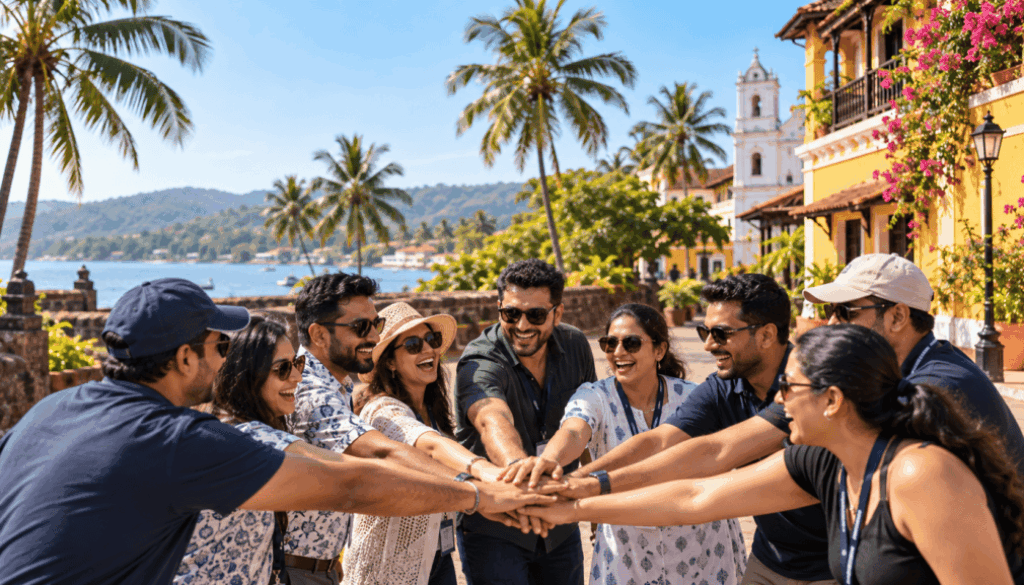
Goa offers a rare combination of accessibility, diverse landscapes, cultural depth, hospitality and experiences that can be adapted to different group sizes and objectives. A team can spend a morning exploring a heritage neighbourhood, work together on a challenge in the afternoon, and come together over a local meal in the evening. The destination provides the setting, while a thoughtfully designed team building experience in Goa gives the retreat its purpose.
For organisations looking beyond the conventional conference-room offsite, Goa is an opportunity to turn a corporate retreat into a shared experience rather than simply a corporate trip.
Why Goa Works So Well for Corporate Retreats
Goa has long been associated with leisure travel, but its strengths make it equally relevant for corporate groups.
The destination combines a relatively compact geography with distinctly different experiences. Within a single retreat, teams can move between heritage spaces, villages, beaches, nature, culinary experiences and community-led activities.
This variety matters because team building works best when participants are given opportunities to interact outside their usual professional roles.
1. A Change of Environment Changes Team Dynamics
Office environments naturally create professional hierarchies and familiar patterns of interaction. People tend to work with the same colleagues, follow established processes and communicate within defined roles.
A retreat creates a different environment.
When a team is navigating an unfamiliar neighbourhood, completing a collaborative challenge or participating in an experience together, those workplace patterns can shift. Someone who is usually quiet in meetings may become the person who notices an important clue. A manager may become a participant rather than a decision-maker. A colleague from another department may emerge as a natural problem solver.
The value of a corporate retreat lies in creating these new interactions.
Goa provides an especially suitable environment because the destination itself offers numerous opportunities for informal interaction and shared discovery.
2. Team Building in Goa Can Go Beyond Conventional Games
Team building is often associated with obstacle courses, indoor games and competitive activities. These formats can be useful, but they are not the only way to strengthen collaboration.
A more meaningful approach is to build activities around communication, problem solving, curiosity, creativity and shared discovery.
For example, a team could participate in a heritage-based challenge where members need to interpret clues, navigate a historic neighbourhood and work collectively towards an objective.
Another group could explore a Goan village, interact with local hosts and understand aspects of food, farming or community life.
The activity becomes more memorable because the team is not simply completing a task. It is experiencing something together.
This is where team building and Goa become a strong combination for corporate retreats. The destination provides a rich environment for activities that are social, experiential and collaborative.
3. Goa Offers Experiences for Different Team Personalities
Every organisation has a mix of personalities.
Some employees enjoy competition. Others prefer creativity. Some are interested in history and culture, while others respond better to food, nature or hands-on activities.
A successful corporate retreat should not assume that one activity will engage everyone equally.
Goa makes it possible to create a varied programme.
Interactive Heritage and Cultural Experiences
Teams can explore areas such as Fontainhas or Aguada through interactive heritage experiences. Instead of simply visiting monuments, participants can be encouraged to observe architecture, understand local stories and interact with the destination.
A heritage walk can also become a team activity by introducing observation challenges, storytelling tasks or collaborative discovery.
Culinary Experiences
Food naturally creates conversation.
A curated culinary experience can bring colleagues together around local ingredients, traditional recipes and Goan food culture. Instead of eating at a restaurant as another scheduled meal, the group participates in an experience where food becomes a medium for interaction.
Village and Community Experiences
Experiences rooted in local communities offer another dimension.
A visit to a village, farm or heritage home can introduce teams to local livelihoods, traditions and knowledge. The interaction is often more personal than conventional sightseeing.
It also gives employees an opportunity to slow down and engage with a different perspective.
Challenges and Gamified Experiences
For teams that thrive on competition, gamified experiences can introduce a stronger problem-solving element.
Amazing Races, escape challenges, quizzes, clue-based trails and quest-based challenges can encourage participants to divide responsibilities, communicate under time pressure and make collective decisions.
These are practical behaviours that translate naturally back into the workplace.
4. Team Building Activities in Goa Can Strengthen Communication
Communication is one of the most important outcomes of effective team building.
But communication is not simply about speaking more. It involves listening, interpreting information, asking the right questions and making sure everyone understands the objective.
Experiential activities create situations where these skills become necessary.
Imagine a team attempting a destination-based challenge. One person has information about the location. Another has the map. A third person has identified a clue. Success depends on how effectively they combine what each individual knows.
There is no presentation explaining the importance of collaboration. The participants experience it directly.
The key insight is that experiential team building allows organisations to observe and practise behaviours rather than simply discuss them.
5. Goa Makes It Easier to Combine Work and Leisure
Corporate retreats still need business relevance.
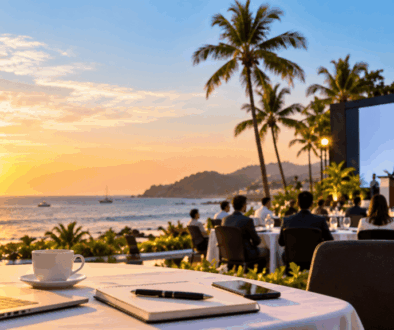
Leadership meetings, strategy sessions, workshops and planning discussions often form an important part of an offsite. At the same time, employees need opportunities to disconnect from their usual work environment.
Goa allows organisations to create a balance.
A retreat could include:
- Morning strategy sessions
- Afternoon experiential activities
- Heritage or cultural exploration
- Team challenges
- Curated local meals
- Informal evening gatherings
- Nature-based activities
- Reflection sessions
This creates a rhythm where structured business time is balanced by shared experiences.
The result is not simply a holiday with a meeting attached to it. It becomes a purpose-designed corporate retreat.
6. The Destination Can Become Part of the Team-Building Exercise
One of the biggest advantages of choosing Goa is that the destination itself can become part of the programme.
Rather than transporting employees from a hotel to an activity venue, organisations can design experiences around the character of Goa.
A team could navigate the streets of Panjim while discovering architectural details. Another could explore a village through food and stories. A group could take part in a challenge around a historic site.
This approach makes the retreat more immersive.
Instead of asking, “What activity can we conduct for our employees?”, the better question becomes:
“What can our team discover and accomplish together in Goa?”
That shift changes the way the retreat is designed.
8. Corporate Retreats Can Create More Meaningful Memories
People remember experiences differently from presentations.
A PowerPoint slide from an annual offsite may be forgotten within weeks. A shared experience involving a challenge, a surprising discovery, a local meal or an unexpected conversation can remain part of the team’s collective memory for much longer.
This matters for organisations because shared memories contribute to organisational culture.
A retreat becomes something employees refer back to:
“Remember when our team solved that challenge?”
“Remember the village experience?”
“Remember how we figured that clue out?”
These shared stories can strengthen a sense of belonging.
For this reason, team building in Goa should not be viewed simply as an employee engagement activity. It can become an opportunity to create shared organisational experiences.
9. Goa Allows Retreats to Be Designed Around Business Objectives
The strongest corporate retreats begin with an objective.
Is the organisation trying to:
- Improve cross-functional collaboration?
- Integrate a newly formed team?
- Strengthen leadership relationships?
- Encourage creative thinking?
- Improve communication?
- Celebrate a milestone?
- Build connections after organisational change?
- Give employees meaningful time away from their regular workplace?
The answer should influence the experience design.
For example, a newly formed team may benefit from collaborative challenges that encourage people to understand each other’s strengths.
A leadership group may benefit more from cultural immersion, reflection and facilitated conversations.
A large sales team may respond well to competitive destination-based challenges.
There is no single ideal team-building activity. The right experience is the one aligned with the team’s purpose.
10. Responsible Experiences Can Add Another Layer of Value
Modern corporate retreats are increasingly expected to consider more than employee entertainment.
Organisations can also consider how their retreat interacts with the destination.
Choosing locally hosted experiences can create opportunities for teams to engage with local businesses, storytellers, artisans, community hosts and cultural practitioners.
Make It Happen’s experience model, for example, includes heritage walks, culinary journeys, village experiences, art experiences, workshops and community-led experiences across Goa. Its source material also highlights how local hosts can benefit through additional income, visibility and opportunities to share their knowledge with travellers.
This provides a useful framework for corporate groups: the retreat can create value for the team while also contributing to the local experience economy.
Responsible deployment should remain part of the planning process, including group size, community sensitivity, environmental considerations and appropriate engagement with local hosts.
The Future of Corporate Retreats Is Experiential
Corporate retreats are evolving.
Employees increasingly value experiences that feel meaningful, social and memorable rather than programmes that simply move them from one meeting room to another.
The most effective retreats therefore combine three elements:
Purpose + Participation + Place
Purpose ensures the retreat has a business objective.
Participation ensures employees are actively involved.
Place provides the context that makes the experience memorable.
Goa brings these three elements together particularly well.
From heritage walks and culinary experiences to village explorations and collaborative challenges, the destination offers enough diversity to design programmes around different teams and objectives.
The opportunity is not to make a corporate retreat more elaborate. It is to make it more intentional.
The key insight is simple: the best corporate retreats do not take teams away from work merely to relax. They take teams out of their usual environment so they can interact, collaborate and discover one another differently.
For organisations planning their next offsite, the question is worth asking: What could your team accomplish together if Goa itself became part of the team-building experience?