Plan the Perfect Corporate Offsite in Goa: A Step-by-Step Guide
A Corporate Offsite in Goa can be much more than a change of location for meetings and presentations. Done well, it can create space for teams to reconnect, collaborate, celebrate achievements and experience a destination together. Goa offers a particularly strong setting because corporate groups can combine structured business sessions with heritage, food, culture, nature and experiential activities. The key is to plan the offsite around the team, rather than simply booking a resort and filling the calendar.
The best corporate offsites balance purpose, participation and place. Here is a practical step-by-step guide to planning one.
Step 1: Define the Purpose of the Offsite
Before choosing a hotel, activity or restaurant, establish why the organisation is conducting the offsite.
A corporate gathering could be designed to:
- Build stronger relationships across teams
- Improve communication and collaboration
- Celebrate a business milestone
- Integrate new employees
- Conduct strategic planning
- Develop leadership alignment
- Give teams time to recharge
- Create a shared experience outside the workplace
The objective should influence every subsequent decision.
For example, a newly integrated team may benefit from collaborative challenges and informal experiences, while a leadership group may need more time for strategic discussions and reflection.
A clear objective prevents the offsite from becoming a collection of disconnected activities.
Step 2: Choose the Right Time to Visit Goa
Timing can significantly influence the experience.
Goa has a distinct seasonal rhythm, so corporate planners should consider weather, demand, accommodation availability and the type of activities they want to include.
The period from approximately November to February is generally popular for outdoor experiences because of the more pleasant weather. However, this is also a busier travel period, particularly around Christmas and New Year.
If the objective is to create a quieter corporate environment, planners should consider periods outside the major holiday peaks.
For a Corporate Offsite in Goa, the right time is ultimately the one that balances employee comfort, programme requirements and operational practicality.
Step 3: Decide Where in Goa Your Team Should Stay
Goa is geographically diverse, and location can shape the character of the retreat.
North Goa
North Goa can work well for groups looking for a lively atmosphere, convenient access to restaurants and a broad range of activities.
South Goa
South Goa generally offers a quieter setting and can suit organisations looking for more privacy, relaxation and resort-based programming.
Panjim and Central Goa
Panjim can be particularly useful for experience-led corporate groups because of its proximity to heritage, cultural and culinary experiences.
The choice should be based on the programme rather than simply the reputation of a particular area.
Step 4: Select Accommodation Based on the Group’s Needs
The hotel or resort should support the objectives of the offsite.
Consider:
- Number of participants
- Room configuration
- Meeting and breakout spaces
- Dining arrangements
- Outdoor areas
- Accessibility
- Transport requirements
- Internet connectivity
- Privacy
- Proximity to planned experiences
Do not underestimate the importance of movement between activities. A beautiful venue can become inconvenient if every external experience requires long transfers.
The best accommodation choice is the one that supports the overall programme, not necessarily the one with the longest list of amenities.
Step 5: Build the Business Programme First
An offsite should still serve its organisational purpose.
Block time for the sessions that genuinely require everyone to be together.
These could include:
- Leadership presentations
- Strategic planning
- Departmental updates
- Workshops
- Brainstorming sessions
- Goal-setting
- Recognition and awards
- Team reflections
Keep these sessions focused.
A common mistake is to reproduce the office timetable at a resort. If employees spend most of the day in conference rooms, the destination becomes little more than a backdrop.
Instead, create a deliberate rhythm between work, experience and downtime.
Step 6: Add Experiential Team Activities
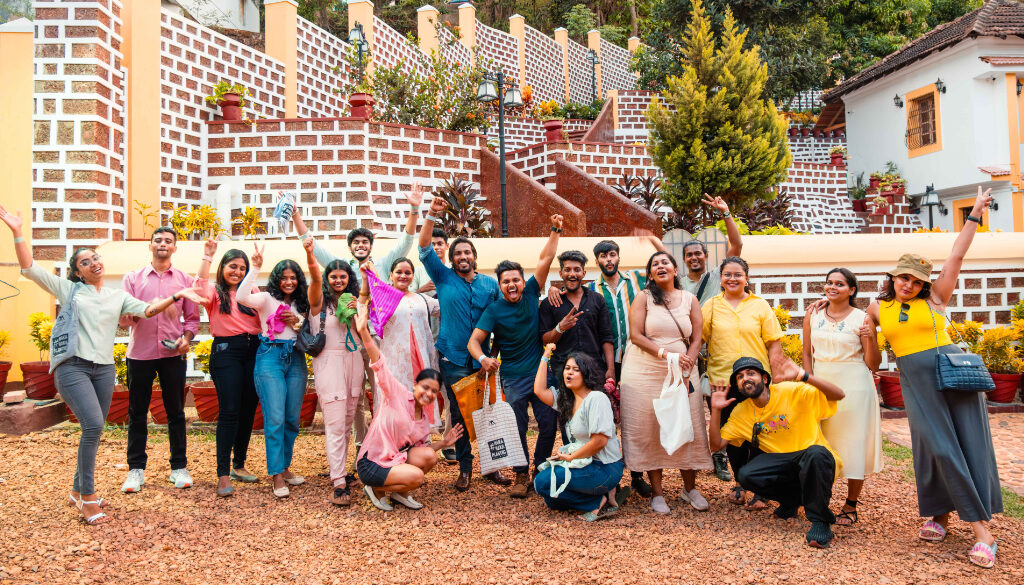
This is where a Corporate Offsite in Goa can become significantly more engaging.
Instead of relying exclusively on conventional indoor games, consider activities that allow teams to discover Goa while working together.
Possible formats include:
Heritage Interactive Quests
Teams can explore neighbourhoods such as Fontainhas through observation, clues and storytelling.
Culinary Experiences
Food-based experiences can introduce teams to Goan cuisine while creating an informal setting for interaction.
Village Experiences
A village-based experience can expose participants to local architecture, livelihoods, traditions and community stories.
Gamified Challenges
Destination-based treasure hunts, escape challenges and team quests can introduce elements of communication, problem solving and friendly competition.
Art and Creative Experiences
Hands-on workshops can encourage collaboration without creating the pressure of a conventional competitive activity.
Make It Happen’s Goa experience ecosystem includes heritage walks, culinary journeys, village experiences, art experiences, workshops and community events, providing examples of how corporate groups can engage with the destination beyond conventional sightseeing.
Step 7: Match Activities to the Team
Not every group enjoys the same type of activity.
A sales team may enjoy a competitive challenge. A creative team may respond better to an art or culinary workshop. A leadership group may prefer a cultural experience followed by facilitated discussion.
Consider:
- Age and fitness levels
- Team size
- Individual comfort levels
- Cultural sensitivities
- Competitive versus collaborative preferences
- Indoor and outdoor requirements
- Accessibility needs
The objective should be participation rather than forced entertainment.
A well-designed experience gives different personalities opportunities to contribute.
Step 8: Create a Balanced Itinerary
Avoid filling every hour.
A three-day Corporate Offsite in Goa, for example, could follow a structure such as:
Day 1: Arrival and Connection
- Arrival and check-in
- Informal lunch
- Business orientation
- Welcome activity
- Team dinner
Day 2: Collaboration and Discovery
- Morning strategy session
- Break
- Team-building experience
- Local culinary or cultural experience
- Informal evening gathering
Day 3: Reflection and Departure
- Short business session
- Team reflection
- Leisure time
- Lunch
- Departure
The exact programme should depend on the group, but the principle remains consistent: build breathing space into the itinerary.
People need time to rest, have informal conversations and absorb the experience.
Step 9: Make Local Experiences Part of the Programme
A corporate retreat becomes more memorable when participants encounter the destination through people and stories rather than only through landmarks.
Goa offers opportunities to meet community hosts, explore traditional neighbourhoods, discover local food and understand aspects of its cultural life.
For example, Make It Happen’s source material includes community hosts who welcome guests into personal spaces and share Goan food, hospitality and stories.
These experiences can also create a more responsible model of corporate travel by directing participation towards local hosts, businesses and cultural practitioners.
Step 10: Plan Transport and Logistics Early
Logistics can make or break an offsite.
For every external activity, establish:
- Pick-up and drop-off points
- Travel time
- Group transportation
- Activity duration
- Meal requirements
- Weather alternatives
- Emergency contacts
- Accessibility requirements
- Payment and booking responsibilities
Large groups should avoid overly ambitious itineraries that depend on perfect traffic conditions and tight transitions.
Leave buffer time.
A smooth corporate retreat feels effortless to participants because the planning happened behind the scenes.
Step 11: Build in Reflection
Team building should not end when the activity ends.
A short reflection can help participants identify what they experienced and how it connects to their workplace.
Ask questions such as:
- What helped us work effectively as a team?
- How did we make decisions?
- Who took initiative?
- Did everyone get an opportunity to contribute?
- What did we learn about colleagues outside our normal roles?
- What can we carry back into our workplace?
This simple step can turn an enjoyable activity into a more meaningful organisational experience.
Step 12: Plan for Responsible Travel
A corporate offsite also provides an opportunity to think about the destination.
Consider local suppliers, community-led experiences, responsible consumption and practical measures to reduce unnecessary waste.
Avoid treating local culture as a performance created solely for visitors. Choose experiences where hosts, communities and practitioners have a genuine role in shaping what participants experience.
This approach can make the retreat more authentic while creating value beyond the organisation itself.
A Simple Planning Checklist
Before confirming the final programme, ensure you have clarity on:
- Purpose: What should the team achieve?
- People: Who is attending and what do they need?
- Place: Which part of Goa best supports the programme?
- Accommodation: Does the venue support both work and leisure?
- Experiences: Are activities participatory and relevant?
- Itinerary: Is there enough balance between structure and downtime?
- Logistics: Are transport and timings realistic?
- Contingencies: What happens if weather or another disruption affects an activity?
- Reflection: How will the team connect the experience back to work?
- Responsibility: How can the programme engage with Goa respectfully?
Bringing It All Together
Planning a Corporate Offsite in Goa is not about creating the most packed itinerary or choosing the most luxurious venue. It is about designing an environment where business objectives and shared experiences reinforce each other.
Goa gives organisations a strong canvas: heritage neighbourhoods, local cuisine, villages, art, nature, community hosts and spaces for relaxation. The planning challenge is to select the right elements and connect them logically.
When the purpose is clear, the activities are relevant, the logistics are realistic and employees have enough room to interact naturally, a corporate offsite becomes more than an annual gathering.
It becomes an opportunity for people to work together differently, understand one another better and create experiences that continue to live within the team long after everyone returns to the office.