MICE Tourism in Goa: A Guide for Corporate Event Planners
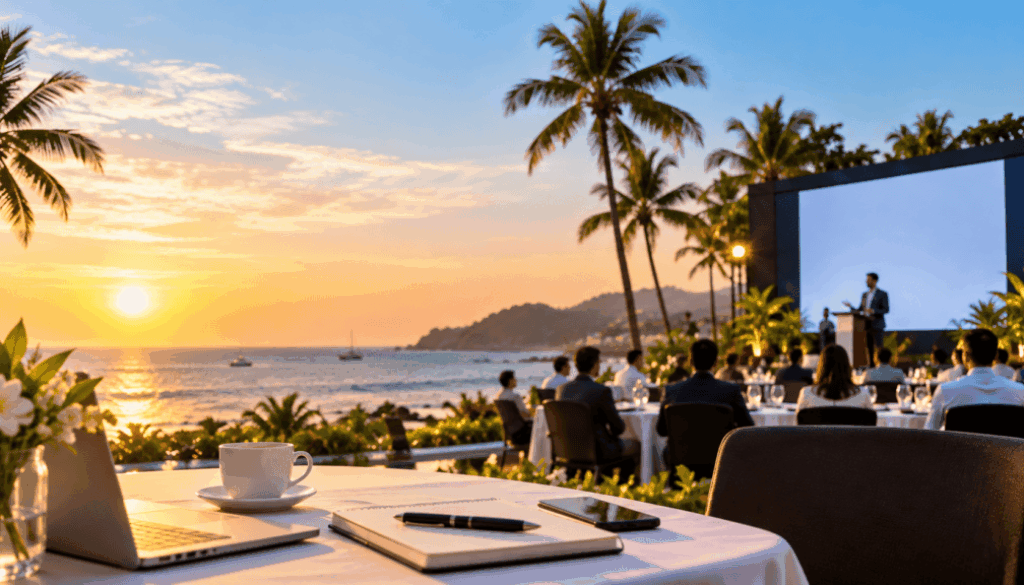
MICE Tourism in Goa offers corporate event planners an unusual advantage: the ability to combine business objectives with a destination that has a strong cultural identity, diverse experiences, quality hospitality and a compact geography. For companies planning meetings, incentives, conferences, team gatherings or corporate celebrations, Goa can provide a setting where structured business programmes and meaningful destination experiences work together.
For event planners, the opportunity goes beyond choosing a hotel with conference facilities. A well-designed corporate programme can incorporate heritage, food, art, local communities, nature and experiential activities, allowing participants to experience Goa rather than simply stay in it.
Understanding MICE Tourism in Goa
MICE stands for Meetings, Incentives, Conferences and Exhibitions. While each category has a different objective, they share one important requirement: the destination must support both the operational and experiential dimensions of the event.
A successful MICE programme therefore needs more than accommodation and meeting rooms. It needs:
- Reliable accommodation and event infrastructure
- Convenient transportation
- Suitable venues for meetings and conferences
- Dining and hospitality options
- Team and group activities
- Entertainment and networking opportunities
- Destination experiences
- Local cultural engagement
- Professional coordination
Goa is particularly interesting because these elements can be combined without making the programme feel like a conventional business trip.
The key insight is that the destination can become part of the event design. Instead of treating leisure activities as an add-on after the business programme, planners can use Goa’s culture, history and communities to create a more distinctive corporate experience.
Why Goa Works as a MICE Destination India Option
When companies evaluate a MICE destination India shortlist, the decision often comes down to more than infrastructure. The destination needs to offer enough variety to accommodate different participants and programme objectives.
Goa provides a combination of coastal landscapes, heritage districts, food culture, village communities, arts and hospitality that gives planners multiple directions for designing a programme.
1. A Strong Balance Between Business and Leisure
One of the biggest challenges in corporate events is maintaining a balance between productive business sessions and participant engagement.
Goa allows planners to structure a day around both.
A morning could be dedicated to a conference or strategy session, followed by an afternoon heritage experience, culinary programme or collaborative challenge. An evening could then transition into a networking dinner or curated local experience.
This creates a rhythm that is different from an event where participants spend the entire day inside a ballroom.
2. Multiple Experience Formats
Different corporate groups require different types of programming.
Some participants respond to structured team challenges. Others prefer cultural immersion, food, art or relaxed social experiences.
Make It Happen’s experience ecosystem in Goa offers possibilities such as:
- Interactive Heritage Experiences
- Gamified destination challenges
- Culinary trails
- Village experiences
- Art experiences
- Workshops
- Nature-based activities
- Community-hosted meals
- Cultural performances
- Informal networking experiences
This experience-led approach provides useful options for corporate planners looking to build destination experiences around a group’s interests and objectives.
Designing the Right Corporate Event
Corporate Event Planning in Goa becomes more effective when planners begin with the purpose of the event rather than the activity list.
The first question should be: What should participants take away from this programme?
The answer could be:
- Stronger relationships between employees
- Better cross-functional interaction
- Leadership alignment
- Recognition and celebration
- Product or business education
- Networking
- Strategic planning
- Employee engagement
- Client relationship building
- A memorable incentive experience
Once the objective is clear, the destination programme becomes easier to design.
Meetings
Meetings require focus, accessibility and reliable facilities. Goa’s hospitality infrastructure allows planners to combine formal meeting spaces with informal environments for smaller conversations and networking.
Conferences
Conferences require greater logistical coordination, particularly when several speakers, sessions, meals and participant movements are involved.
The destination programme can be designed around the conference schedule, giving attendees opportunities to discover Goa before, between or after sessions.
Incentive Programmes
Incentive travel has a different objective from a conventional business meeting. The experience itself becomes part of the reward.
That makes Incentive Travel in Goa particularly suited to experiential programming.
Instead of simply offering leisure time, planners can create curated experiences that feel distinctive to the destination. A heritage walk through Fontainhas, a private culinary experience or a community-hosted meal can give participants a more personal connection with Goa.
Exhibitions and Corporate Showcases
Exhibitions require venue capacity, technical coordination and participant movement. However, networking outside the exhibition floor is equally important.
Curated dinners, cultural activities and informal destination experiences can give participants opportunities to build relationships in a less formal environment.
Moving Beyond the Resort
A common approach to corporate events is to keep participants inside the property for most of the programme.
This is operationally convenient, but it can also make different destinations feel interchangeable.
A more destination-led approach asks what participants can experience outside the venue.
For example, Fontainhas can provide a heritage setting for a guided experience. Goa’s culinary traditions can form the basis of a food-focused programme. A village experience can introduce participants to local livelihoods and architecture.
Make It Happen’s community-hosted experiences demonstrate how local spaces can become part of a curated programme. Community hosts welcome guests into their homes in Fontainhas, Divar Island, Chandor and Saligao to share Goan food, hospitality and personal stories.
This approach also gives corporate groups an opportunity to engage with local people rather than experiencing Goa exclusively through commercial venues.
Team Building as Part of a MICE Programme
Team building can be incorporated into corporate events without turning the programme into a sequence of conventional games.
The stronger approach is to design challenges around the destination.
Teams could participate in:
- A heritage discovery challenge
- A destination-based treasure hunt
- A collaborative food activity
- A village exploration
- An escape-style challenge
- A creative workshop
- A photography or observation challenge
The objective should be to encourage communication, decision-making and collaboration while participants are experiencing something specific to Goa.
This is where Corporate Event Planning in Goa can become more experiential. Instead of asking participants to complete generic activities that could happen anywhere, planners can create challenges that depend on the destination.
Creating Meaningful Incentive Travel Experiences
Incentive Travel in Goa should feel different from an ordinary leisure holiday.
The programme needs a sense of discovery and exclusivity without becoming unnecessarily elaborate.
Consider a group arriving at a heritage home for a hosted meal. The experience can include the story of the house, interaction with the hosts and a menu rooted in Goan traditions.
Or consider a curated heritage experience where participants explore a neighbourhood through architecture, stories and local characters.
The value comes from access and context.
For incentive groups, planners should consider experiences that:
- Are difficult to replicate elsewhere
- Encourage interaction
- Have a strong connection to Goa
- Can accommodate the group’s size
- Allow sufficient time for participants to engage
- Are professionally coordinated
- Respect local communities and cultural contexts
The result is an incentive programme built around memory rather than simply consumption.
Building a Responsible MICE Programme
Corporate events also create an opportunity to think about the destination’s local economy.
Rather than sourcing every component from large hospitality providers, planners can incorporate local businesses, community hosts, storytellers, artisans and culinary practitioners where appropriate.
This can create a broader distribution of economic value while giving participants access to more authentic experiences.
For example, Make It Happen’s collaboration with community hosts has created additional opportunities for local people to share their homes, food, farms, cultural knowledge and stories with visitors. One community host describes how an immersive coconut farm experience created additional income opportunities for people in the village and strengthened local pride.
For corporate planners, responsible destination engagement should be practical rather than performative. Group sizes, local sensitivities, waste management, transportation and community consent all need to be considered during programme design.
How to Plan a MICE Event in Goa
A structured planning process can make a significant difference.
Step 1: Establish the Business Objective
Define whether the programme is a meeting, incentive, conference, exhibition, celebration or a combination.
Step 2: Understand the Participants
Consider group size, demographics, professional roles, interests, mobility requirements and expectations.
Step 3: Select the Base Location
Choose accommodation based on access, event facilities, experience requirements and transportation logistics.
Step 4: Build the Core Business Programme
Block meeting, conference and presentation requirements first.
Step 5: Add Destination Experiences
Choose experiences that support the event objective rather than simply filling free time.
Step 6: Plan Transportation
Goa may be compact, but event traffic, group movement and activity timings still require careful planning.
Step 7: Create Contingencies
Outdoor and experiential programmes need alternatives for weather disruptions and operational changes.
Step 8: Build in Informal Time
Participants need opportunities to have conversations outside formal sessions. Do not schedule every minute.
Step 9: Coordinate With Local Experience Partners
A specialist experience partner can help with storytelling, local access, group handling, experience design and on-ground coordination.
Step 10: Evaluate the Experience
After the event, gather participant feedback and assess whether the programme achieved its original objectives.
What Corporate Event Planners Should Look For in a Local Partner
Choosing the right destination partner is as important as choosing the right venue.
Look for a partner who can demonstrate:
- Experience handling groups
- Strong local knowledge
- Clear operational processes
- Trained storytellers or hosts
- Experience customisation capabilities
- Reliable communication
- Safety and contingency planning
- Responsible engagement with communities
- Ability to coordinate multiple experiences
A local partner can also bridge the gap between what an event planner wants to achieve and what is realistically possible on the ground.
This is particularly valuable when an organisation is planning its first programme in Goa.
When Is the Best Time for MICE Events in Goa?
The ideal period depends on the event format, budget, accommodation requirements and desired experiences.
The more popular travel periods can bring greater demand for accommodation and venues, so corporate planners should consider booking requirements well in advance.
For outdoor and experience-led programmes, planners should also consider seasonal conditions and maintain alternatives where necessary.
Rather than selecting dates purely around the destination’s peak travel season, the better approach is to match the dates to the event’s priorities.
A Practical Framework for Event Planners
For planners evaluating Goa, a simple framework can help:
Business objective → Participant profile → Venue → Experience → Logistics → Local engagement → Contingency → Measurement
This sequence keeps the programme grounded in purpose.
The most effective Corporate Event Planning in Goa does not begin with a list of activities. It begins with understanding what the organisation wants to achieve and then identifying how Goa can help deliver that experience.
For incentive programmes, the same principle applies. Incentive Travel in Goa becomes more valuable when the experiences feel distinctive, locally rooted and thoughtfully curated.
And for organisations comparing a MICE destination India shortlist, Goa deserves consideration not simply because it is a familiar leisure destination, but because it can support a corporate programme where business, culture, hospitality and experience exist within the same itinerary.
For event planners, that is the real opportunity: designing an event where Goa is not merely the location, but an active part of the experience.
FAQs About MICE Tourism in Goa
-
Goa combines hospitality infrastructure with cultural, culinary, heritage and community-based experiences. This allows planners to build programmes that combine formal business requirements with destination-led activities.