15 Historical Places in Bangalore: Explore the City’s Rich Heritage and History
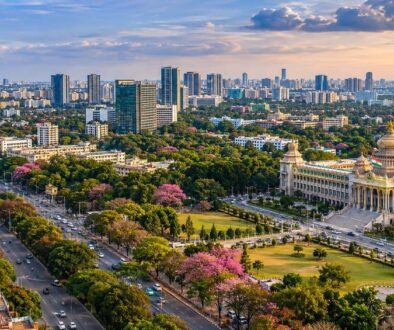
Looking for historical places in Bangalore beyond the usual palace selfie? India’s Garden City has a fascinating history that stretches across centuries, shaped by regional kingdoms, royal dynasties, military establishments, colonial influences and vibrant local communities. Behind its modern skyline and thriving technology industry lies a city with an extraordinary collection of forts, palaces, temples, churches, monuments and historic neighbourhoods.
Known today as Bengaluru, the city has evolved through several important historical periods. From the fortified settlement established by Kempegowda I in the sixteenth century to the architectural legacy of Tipu Sultan and the Mysore Wadiyars, Bangalore’s past is reflected in its buildings, streets and cultural traditions.
Whether you are a history enthusiast, an architecture lover, a student or a traveller interested in understanding the city’s origins, exploring its heritage offers a different perspective on Bangalore. Some landmarks preserve stories of royal ambition and military resistance, while others reveal the religious traditions, urban planning and community life that shaped the city.
This guide explores 15 historical places in Bangalore that deserve a place on your itinerary, including lesser-known heritage sites and neighbourhoods that reveal the city’s many layers of history.
1. Understanding the History of Bangalore
The history of Bangalore is closely connected to the rise and fall of several kingdoms and the transformation of the Deccan region. Its historical identity is not defined by a single dynasty or architectural style. Instead, it reflects the contributions of different rulers, communities, religious institutions and colonial administrations.
The Founding of Bangalore
The modern historical narrative of Bangalore is commonly traced to 1537, when Kempegowda I, a feudatory ruler under the Vijayanagara Empire, established a fortified settlement here.
The settlement developed around a mud fort and four watchtowers, traditionally associated with the boundaries of the growing town. Kempegowda’s vision helped establish Bangalore as an important centre for trade, administration and community life.
Over subsequent centuries, the city came under different political influences, including the Marathas, the Kingdom of Mysore under Hyder Ali and Tipu Sultan, and eventually British administration.
Bangalore Under Tipu Sultan and the Mysore Kingdom
The eighteenth century was a significant period in Bangalore’s history. Hyder Ali and his son Tipu Sultan strengthened the city’s military and administrative importance.
Bangalore Fort and Tipu Sultan’s Summer Palace are among the surviving structures associated with this period. They offer insights into the military architecture, political ambitions and artistic traditions of the Mysore Kingdom.
Following the fall of Tipu Sultan in 1799, the political landscape changed, and Bangalore increasingly developed as an important administrative and military centre.
The Colonial Influence on Bangalore
The British administration brought another transformation to the city. The establishment of the Bangalore Cantonment led to the development of new residential neighbourhoods, churches, educational institutions, commercial streets and civic buildings.
Areas such as Richards Town preserve elements of this colonial-era urban development. Buildings such as Attara Kacheri and St. Mary’s Basilica also reflect the architectural and institutional influences of this period.
The key insight is that Bangalore’s heritage is spread across the city. Understanding its history requires exploring not only its famous monuments but also its neighbourhoods, religious institutions and everyday cultural landscapes.
2. 15 Historical Places in Bangalore You Should Explore
Bangalore’s historical landmarks represent different periods of its evolution. From sixteenth-century fortifications and temples to colonial-era churches and twentieth-century civic architecture, each destination tells a different story.
Here are 15 heritage places in Bangalore worth discovering.
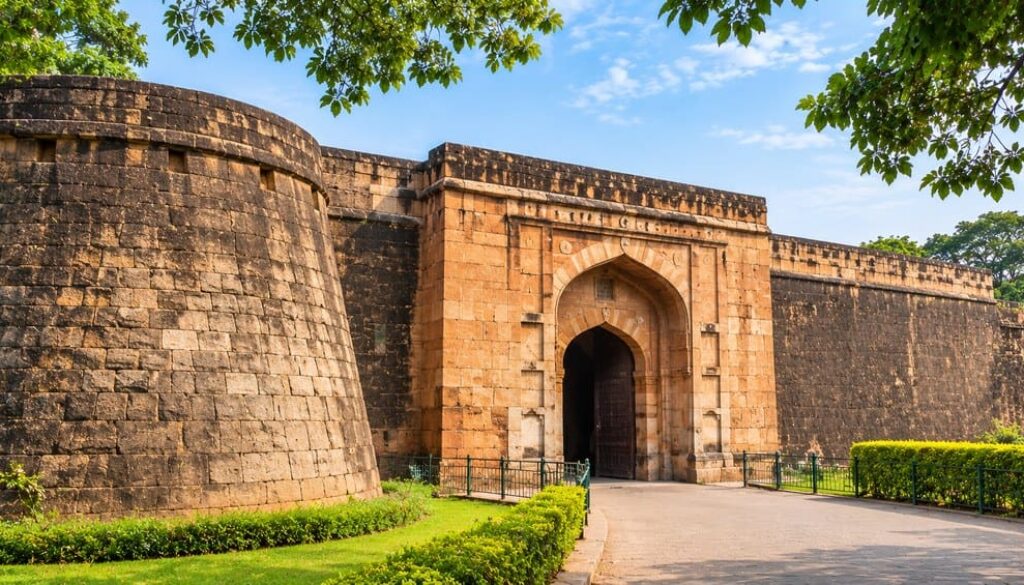
1. Bangalore Fort
Bangalore Fort is one of the most significant monuments associated with the city’s founding. Originally constructed as a mud fort by Kempegowda I in 1537, it was later strengthened and expanded by Hyder Ali and Tipu Sultan.
Hyder Ali transformed the original mud fort into a stone fort in the eighteenth century. The structure subsequently became an important military stronghold during the Anglo-Mysore conflicts.
Although much of the original fortification has disappeared due to urban development, the surviving entrance and sections of the fort provide a glimpse into Bangalore’s military past. The fort’s historic Ganapati temple is another interesting feature.
Why visit: To understand the origins of Bangalore and the military history associated with the Mysore Kingdom.
2. Tipu Sultan’s Summer Palace
Located within the historic Bangalore Fort area, Tipu Sultan’s Summer Palace is among the city’s most remarkable examples of Indo-Islamic architecture.
Construction was initiated by Hyder Ali and completed during the reign of Tipu Sultan in 1791. The palace served as a summer residence for the ruler and reflects the artistic and architectural traditions of the period.
The two-storeyed wooden structure is characterised by ornamental arches, carved pillars, balconies and decorative interiors. Its teakwood construction and intricate detailing make it particularly distinctive.
After Tipu Sultan’s defeat in 1799, the British administration used the building as a secretariat before shifting its offices to Attara Kacheri.
Why visit: To explore the architectural legacy of Tipu Sultan and understand the royal history of Bangalore.
3. Bangalore Palace
Bangalore Palace is one of the city’s most recognisable royal landmarks. Its history is associated with the Wadiyar dynasty, which ruled the Kingdom of Mysore for several centuries.
The building was originally constructed by Reverend J. Garrett in 1878. It was subsequently purchased by Maharaja Chamarajendra Wadiyar X and transformed into a royal residence.
Inspired by Tudor Revival architecture and English castles, the palace features fortified towers, elaborate woodwork, ornate interiors and a grand Durbar Hall. Its collection of paintings, royal portraits and historical objects offers insights into the lifestyle of the Mysore royal family.
The palace also hosts cultural events and performances, continuing its association with the city’s cultural life.
Why visit: To experience the architectural grandeur and royal heritage of Bangalore.
4. Bull Temple (Dodda Basavana Gudi)
Located in Basavanagudi, the Bull Temple is among Bangalore’s important religious heritage sites. Dedicated to Nandi, the sacred bull associated with Lord Shiva, the temple is particularly known for its enormous monolithic granite statue.
The temple is traditionally associated with Kempegowda I and reflects the religious and architectural traditions of the period. Its Dravidian architectural elements and distinctive stone sculpture make it an important cultural landmark.
The surrounding neighbourhood also offers an opportunity to explore traditional markets, old residential streets and local food establishments.
The annual Kadalekayi Parishe, or Groundnut Festival, is another cultural highlight associated with this part of Bangalore.
Why visit: To discover the religious heritage of Basavanagudi and its connection with Bangalore’s founding history.
5. Gavi Gangadhareshwara Temple
Gavi Gangadhareshwara Temple is one of Bangalore’s most distinctive ancient cave temples. Located in Gavipuram, it is known for its unusual rock-cut setting and remarkable astronomical alignment.
The temple is traditionally associated with Kempegowda’s reign. Its architecture incorporates granite monoliths, a stone bull, sun and moon discs, and a naturally formed cave setting.
One of its most fascinating features is the annual Makara Sankranti phenomenon. During the event, sunlight passes through the horns of the stone bull and illuminates the Shiva Lingam inside the temple.
This alignment attracts devotees and visitors interested in the relationship between traditional architecture, astronomy and religious practices.
Why visit: To experience a unique combination of religious heritage, stone architecture and astronomical observation.
6. Kempegowda Towers
The Kempegowda Towers are among the most important surviving structures associated with Bangalore’s early urban development.
Traditionally, four watchtowers were erected at different points around the settlement established by Kempegowda I. They are popularly associated with the boundaries up to which the founder envisioned the city would expand.
The towers are located around different parts of present-day Bangalore, including Lalbagh and Ulsoor Lake. Their distinctive stone architecture and historical associations make them important heritage landmarks.
These structures are particularly interesting because they connect the city’s present geographical spread with its early history as a fortified settlement.
Why visit: To understand Kempegowda’s contribution to Bangalore’s urban planning and the origins of the city’s geographical identity.
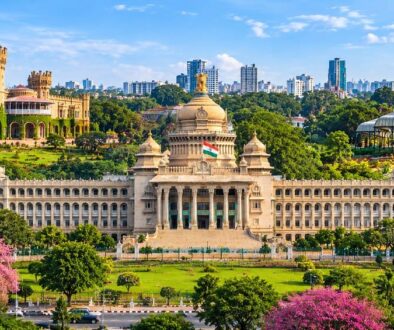
7. Vidhana Soudha
Vidhana Soudha is one of the most iconic architectural landmarks in Bangalore. Although it belongs to the post-independence period rather than the city’s older royal history, it represents an important chapter in Karnataka’s political and architectural development.
The foundation stone was laid in 1951 by India’s first Prime Minister, Jawaharlal Nehru. The building was completed in 1956 under the leadership of then Chief Minister Kengal Hanumanthaiah.
Its architecture combines influences from Dravidian, Indo-Islamic and British styles. Constructed largely using granite, the building houses the Karnataka Legislature and state government offices.
Its imposing façade, central dome and monumental columns make it one of the most photographed structures in the city.
Why visit: To appreciate modern India’s public architecture and understand the evolution of Karnataka’s democratic institutions.
8. Attara Kacheri (High Court of Karnataka)
Located opposite Vidhana Soudha, Attara Kacheri is an important colonial-era building that houses the High Court of Karnataka.
The name Attara Kacheri translates to eighteen offices or departments. The building originally served as the administrative secretariat of the erstwhile Mysore State.
Developed during the administration of Lewin Bentham Bowring, the structure became an important centre for governance and judicial administration. Its red façade, classical columns and Victorian architectural features distinguish it from the surrounding buildings.
The building’s history is particularly interesting because the executive, legislative and judicial functions of the erstwhile Mysore State were once associated with this institution.
Why visit: To explore Bangalore’s colonial administrative heritage and the history of its judicial institutions.
9. St. Mary’s Basilica
St. Mary’s Basilica in Shivajinagar is one of Bangalore’s most historically significant Christian landmarks.
Its origins can be traced to an earlier chapel established in the nineteenth century. The present church was built under the direction of Reverend Fr. Kleiner and consecrated on 8 September 1882.
The basilica is known for its Gothic architectural style, pointed arches, stained-glass windows, vaulted ceiling and impressive towers. It is also an important centre of devotion, particularly during the annual Feast of the Nativity of the Blessed Virgin Mary in September.
In 1973, Pope Paul VI elevated the church to the status of a minor basilica, making it an important religious landmark in India.
Why visit: To appreciate Gothic architecture and explore the religious history of Bangalore’s cantonment area.
10. Holy Ghost Church
Holy Ghost Church, located on Davis Road, offers an interesting insight into Bangalore’s twentieth-century religious and community history.
The church was established by the Redemptorist Congregation and officially erected as a parish on 24 May 1953. Its foundation is connected with the arrival and development of the Redemptorist community in Bangalore from 1940 onwards.
The church is dedicated to the Holy Spirit and Our Lady of Perpetual Help. Its establishment was part of a larger community-building effort involving religious services, education and social support.
Unlike older colonial churches, Holy Ghost Church represents the development of Bangalore’s post-war Catholic institutions and their contribution to local communities.
Why visit: To understand the city’s religious diversity and the development of its twentieth-century community institutions.
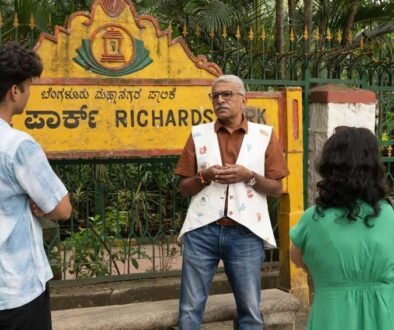
11. Richards Town
Richards Town is a historic residential neighbourhood that preserves elements of Bangalore’s colonial-era urban development.
The locality emerged around the late nineteenth and early twentieth centuries as the Bangalore Cantonment expanded. It was named after F.J. Richards, who served as president of the British cantonment municipality.
The neighbourhood developed with broad roads, residential plots, bungalows and community infrastructure. Its streets still retain several older buildings that reflect European-influenced residential architecture.
Exploring Richards Town offers a different experience from visiting individual monuments. It allows visitors to understand how colonial administration influenced Bangalore’s residential planning and social geography.
Why visit: To discover the architectural character and stories of an old Bangalore neighbourhood.
12. Basavanagudi
Basavanagudi is one of Bangalore’s most culturally distinctive traditional neighbourhoods. Its identity is closely associated with temples, traditional homes, local markets and community festivals.
The neighbourhood developed as an important residential extension of Bangalore and retains much of its traditional character. Its streets are lined with old establishments, religious institutions and businesses that have served generations of residents.
The Bull Temple, Bugle Rock and Gandhi Bazaar are some of its important attractions.
A walk through Basavanagudi offers an opportunity to observe how local traditions, religious practices, food cultures and community life continue to shape Bangalore’s identity.
Why visit: To experience the living heritage of Bangalore through its neighbourhood, markets and traditions.
13. Devanahalli Fort
Located approximately 35–40 kilometres from Bangalore, Devanahalli Fort is an important historical destination associated with the region’s military and political history.
The original fort was constructed in 1501 by Mallabairegowda of the Avati clan. It remained under the control of his descendants before being captured by the Mysore forces in the eighteenth century.
The fort subsequently came under the control of Hyder Ali and Tipu Sultan. It was captured by the British under Lord Cornwallis during the Anglo-Mysore War of 1791.
The fort is characterised by its stone fortifications, semi-circular bastions, defensive walls and distinctive gateways. It is also closely associated with the birthplace of Tipu Sultan, located nearby.
Why visit: To explore the military history of the region and discover an important fortification beyond central Bangalore.
14. Kote Venkataramana Temple
Located near Bangalore Fort on K.R. Road, Kote Venkataramana Temple is an important religious and architectural landmark.
Dating to the seventeenth century, the temple is dedicated to Lord Venkateshwara and reflects Vijayanagara and Dravidian architectural influences.
Its traditional stone construction, sculptural details and religious significance make it an important part of the old Bangalore landscape. The temple also provides insights into the influence of the Mysore royal family and the religious traditions that developed around the historic fortified settlement.
Its location makes it particularly convenient to combine with a visit to Bangalore Fort and Tipu Sultan’s Summer Palace.
Why visit: To explore the religious architecture and historical temple traditions of old Bangalore.
15. Someshwara Temple, Halasuru
Someshwara Temple in Halasuru, also known as Ulsoor, is one of Bangalore’s significant historic temples.
Dedicated to Lord Shiva, the temple is known for its traditional Dravidian architectural features, sculpted pillars, ornate gateways and detailed carvings.
Its origins are associated with the earlier periods of Bangalore’s history, while the surviving architectural structure reflects later developments and patronage, including the Vijayanagara period.
The temple remains an active place of worship and an important part of the Halasuru neighbourhood’s cultural identity.
Why visit: To appreciate traditional temple architecture and discover the religious heritage of one of Bangalore’s historic neighbourhoods.
3. Explore Bangalore’s Heritage Beyond Its Monuments
Historical exploration does not have to be limited to forts, palaces and temples. Some of Bangalore’s most interesting stories are found in its streets, residential neighbourhoods and community spaces.
The city’s heritage is a combination of tangible and intangible traditions. Buildings and monuments represent its physical history, while local food, festivals, craftsmanship, religious practices and storytelling preserve its living cultural identity.
Discover Bangalore Through Heritage Walks
A heritage walk is one of the most engaging ways to understand the city’s history. Instead of simply looking at historic buildings, visitors learn about their origins, architectural styles, historical significance and connections with the surrounding communities.
Neighbourhoods such as Richards Town and Basavanagudi are particularly rewarding for guided explorations.
A knowledgeable storyteller can connect individual buildings with broader historical developments, making the experience more meaningful than conventional sightseeing.
Understand the City’s Cultural Evolution
Bangalore’s history is reflected in its diverse communities. The old Pete area, the colonial Cantonment and the traditional residential extensions each developed distinct identities.
Exploring these neighbourhoods helps visitors understand how trade, migration, administration and cultural exchange influenced the city’s growth.
Experience Heritage Through Local Stories
Every historic neighbourhood has stories that are not always documented on information boards.
These could include the history of a family-owned establishment, the origins of a local festival, the architectural features of an old residence or the traditions associated with a neighbourhood temple.
The most meaningful way to experience heritage is to connect historical places with the people and communities who continue to preserve their stories.
4. How to Plan a Historical Places Tour in Bangalore
Bangalore’s historic attractions are spread across different parts of the city. Planning your visits geographically can help you explore more efficiently without spending excessive time travelling.
Here is a suggested two-day heritage itinerary.
| Day | Time | Places to explore |
|---|---|---|
| Day 1 | Morning | Bangalore Fort and Tipu Sultan’s Summer Palace |
| Day 1 | Morning | Honestly Bengaluru Food Trail starting at Dodda Basavangudi temple |
| Day 1 | Afternoon | Gavi Gangadhareshwara Temple and Kote Venkataramana Temple |
| Day 1 | Evening | Gandhi Bazaar |
| Day 2 | Morning | Bangalore Palace |
| Day 2 | Late morning | Vidhana Soudha and Attara Kacheri |
| Day 2 | Afternoon | St. Mary’s Basilica |
| Day 2 | Evening | Richards Town Heritage Walk |
Devanahalli Fort can be planned as a separate excursion, particularly if you have additional time.
For a more enriching experience, consider joining a guided heritage walk. Historical interpretation and local storytelling can help connect the places you visit with the larger history of Bangalore.
5. Frequently Asked Questions About Historical Places in Bangalore
1. What are the famous historical places in Bangalore?
Some of the most famous historical places in Bangalore include Bangalore Fort, Tipu Sultan’s Summer Palace, Bangalore Palace, Bull Temple, Gavi Gangadhareshwara Temple, Vidhana Soudha, Attara Kacheri and St. Mary’s Basilica. These landmarks represent different periods of the city’s history.
2. Who founded Bangalore?
Bangalore was founded as a fortified settlement by Kempegowda I in 1537. He was a chieftain under the Vijayanagara Empire and established a mud fort that became the foundation for the historic city.
3. What is the oldest monument in Bangalore?
Bangalore Fort, originally built in 1537, is among the oldest major surviving monuments associated with the city’s founding. However, the region has older archaeological and inscriptional evidence of settlements dating back several centuries before Kempegowda’s time.
4. Is Bangalore Palace worth visiting?
Yes. Bangalore Palace is worth visiting for its Tudor Revival architecture, royal interiors, wooden carvings, historical paintings and connection with the Wadiyar dynasty. It offers an insight into the royal heritage of Karnataka.
5. Are there heritage walks in Bangalore?
Yes. Heritage walks are available in neighbourhoods such as Richards Town and other historic parts of Bangalore. These guided experiences introduce visitors to the city’s architecture, history, local communities and cultural traditions.
6. Which historical places in Bangalore are free to visit?
Some places can be explored without an admission fee, including the exterior surroundings of Vidhana Soudha, several historic neighbourhoods, public streets and certain temples and churches. Entry conditions vary, so check individual sites before visiting.
7. What is Bangalore famous for historically?
Bangalore is historically known for its fortified settlement established by Kempegowda, its association with Hyder Ali and Tipu Sultan, the Mysore Wadiyar dynasty, colonial-era Cantonment and its development as an important administrative centre.
8. What are the best heritage places in Bangalore for architecture lovers?
Bangalore Palace, Tipu Sultan’s Summer Palace, Attara Kacheri, St. Mary’s Basilica, Vidhana Soudha and Gavi Gangadhareshwara Temple are excellent destinations for architecture enthusiasts. They represent different architectural traditions and historical periods.
9. What is the historical significance of Bangalore Fort?
Bangalore Fort was originally constructed by Kempegowda I in 1537. It was later strengthened by Hyder Ali and Tipu Sultan and became an important military stronghold during the Anglo-Mysore conflicts.
10. Where is Tipu Sultan’s Summer Palace located?
Tipu Sultan’s Summer Palace is located in the old part of Bangalore, near Kalasipalya and within the historic Bangalore Fort area. It is accessible by road from the city centre.
11. Why is Gavi Gangadhareshwara Temple famous?
Gavi Gangadhareshwara Temple is famous for its cave architecture and the annual Makara Sankranti solar alignment. During this event, sunlight passes through the horns of the stone Nandi and illuminates the Shiva Lingam inside the temple.
12. What is the significance of Kempegowda Towers?
The Kempegowda Towers are traditionally associated with the boundaries of the original Bangalore settlement. They represent Kempegowda’s vision for the city’s development and are important historical reminders of its founding.
13. Which historical places in Bangalore are associated with Tipu Sultan?
Bangalore Fort and Tipu Sultan’s Summer Palace are the most prominent landmarks associated with Tipu Sultan. Devanahalli Fort is also historically connected with Tipu Sultan and his family.
14. What is the difference between Vidhana Soudha and Attara Kacheri?
Vidhana Soudha is the seat of Karnataka’s Legislature and Secretariat, completed in 1956. Attara Kacheri is the historic red building opposite it, which originally housed the administrative offices of the Mysore State and now houses the Karnataka High Court.
15. Which are the oldest neighbourhoods in Bangalore?
Basavanagudi, Malleswaram, Richards Town, Shivajinagar and the old Pete areas are among Bangalore’s historically significant neighbourhoods. Each reflects a different phase of the city’s residential, commercial and cultural development.
16. What is the historical importance of Devanahalli Fort?
Devanahalli Fort was built in 1501 by Mallabairegowda. It subsequently came under the control of the Mysore Kingdom, Hyder Ali and Tipu Sultan before being captured by the British in 1791.
17. Is Bangalore Palace still owned by the royal family?
Yes. Bangalore Palace remains associated with the Wadiyar royal family, who acquired the property after its original construction. It continues to retain its historical and cultural significance.
18. Which churches in Bangalore have historical significance?
St. Mary’s Basilica, Holy Ghost Church, St. Patrick’s Church and Holy Trinity Church are among Bangalore’s historically significant Christian institutions. They reflect the development of religious communities during different periods of the city’s history.
19. How much time is required to explore historical places in Bangalore?
Two days are a reasonable starting point for exploring several major historical attractions within Bangalore. Travellers interested in neighbourhood heritage and destinations such as Devanahalli Fort should consider spending additional time.
20. What is the best way to explore Bangalore’s history?
The best approach is to combine visits to historical monuments with guided heritage walks, neighbourhood explorations and cultural experiences. This helps visitors understand not only the buildings but also the people, traditions and events that shaped Bangalore.
21. What are the best historical places to visit near Bangalore?
Devanahalli Fort, Nandi Hills, Channapatna and the historic settlements around the outskirts of Bangalore offer interesting opportunities for heritage exploration and day trips.
22. Are historical monuments in Bangalore open throughout the week?
Opening days and timings vary depending on the monument and the managing authority. Some religious institutions are open daily, while museums and protected monuments may follow specific visiting schedules. It is advisable to verify timings before planning your visit.
6. Discover Bangalore’s History Through Make It Happen
Bangalore’s history cannot be understood through monuments alone. Its identity has been shaped by centuries of cultural exchange, royal patronage, religious traditions, colonial influences and the everyday contributions of local communities.
From the fortifications established by Kempegowda to the architectural legacy of Tipu Sultan and the Wadiyars, every historical landmark offers a different perspective on the city’s evolution.
At Make It Happen, we believe that heritage is best experienced through stories. Our curated heritage experiences bring together historical research, local knowledge and storytelling to help travellers discover the lesser-known dimensions of Bangalore.
Explore neighbourhoods, understand architectural heritage, discover local traditions and engage with the communities that continue to shape the city’s cultural identity.
Go beyond monuments. Discover the stories that make Bangalore what it is today.
Explore heritage experiences with Make It Happen.