The Soul of Goan Cuisine: Where Spices Sing and Stories Simmer
When the first monsoon showers arrive in Goa, the whole state feels different. The air thickens with the smell of earth and spices. Life slows down, and something beautiful unfolds in its kitchens. Beyond the postcard beaches and scenic drives, Goa reveals itself in a more personal way—through its food.
Goan cuisine is not merely a mix of ingredients; it is a vibrant memory of its people, their journeys, and their deep ties to land and sea. Eating in Goa, especially during the monsoon, helps you understand its essence—layered, warm, and full of stories.
A Blend Amalgamated Through Time
Goa’s culinary heritage has developed over centuries of cultural exchanges. The food here reflects the lives of communities that have lived, traded, and celebrated on this land. The Hindu Saraswat traditions strongly influence dishes based on seasonal vegetables, legumes, and seafood, like Kismur (a spicy dried prawn salad) or Tonak (a rich mushroom or black-eyed bean gravy).
With the Portuguese arrival in the 16th century, Goa’s cuisine welcomed new ingredients and techniques. Pork, tomatoes, and cashews made their entrance. The famous Vindaloo, often seen as just a spicy curry, is really a slow-cooked pork dish flavored with garlic (vinha d’alhos), vinegar, and warm spices. Other staples like Sarpotel, Chouris (Goan sausages), and rich baked sweets such as Bebinca all trace their origins to Portuguese culinary traditions, now adapted and woven into Goan identity.
The Muslim communities added hearty rice dishes and flavorful gravies that are aromatic, celebratory, and complex. The combination of these historical influences results in a cuisine that balances bold flavors with local tastes, creating something entirely unique.
Spices That Speak a Language of Their Own
If you walk through a Goan market during the monsoon, you’ll find baskets overflowing with red chillies, mustard seeds, black pepper, and coriander, alongside kokum rinds, cinnamon sticks, and freshly grated coconut. These are not just flavor boosters—they carry stories.
Each spice used in Goan cuisine serves a purpose in taste, preserving food, aiding digestion, and warming the body. This is especially important during the damp monsoon months. For instance, the use of toddy vinegar gives Goan pork dishes their distinct tang and acts as a natural preservative in humid conditions. Tamarind adds depth to seafood curries, and kokum, with its sharp sourness, balances the heat from chillies while cooling the body.
Coconut is also essential, appearing in various forms—raw, toasted, or pressed into milk. It adds richness to gravies, texture to dry dishes, and sweetness to desserts. In a Goan kitchen, coconut isn’t just another ingredient; it symbolizes abundance and a connection to the land.
Kitchens of the Monsoon
During the rainy season, cooking in Goa adopts a slower, more reflective pace. The heat of the fire, the hiss of spices being tempered, and the rhythmic pounding of ingredients in a stone grinder transform the kitchen into a sanctuary.
In many homes around Goa’s villages, traditional cooking tools remain in use. Clay pots, or matthi, are preferred for fish curries because they retain heat and add subtle earthiness. Meals are often prepared over wood-fired stoves, where a smoky flavor lightly clings to the meats and vegetables.
The monsoon also brings comfort foods—steaming prawn curry with rice, dal and pickle, or a bowl of hot pez (rice porridge) served with dried prawns and coconut chutney. These dishes don’t just satisfy hunger—they connect you to generations before and provide a kind of culinary mindfulness that fast food cannot offer.
Monsoon and the Mood of Food
The monsoon enhances the sensory experience of eating. Maybe it’s the contrast—the chill from the rain and the warmth of the food, the stillness outside and the bustling kitchen. A simple Ros Omelette from a street cart tastes delicious after a long, rainy walk. A glass of urak or solkadhi feels like a warm embrace. Sweets like Patoleo, steamed in turmeric leaves during the festival of Sao Joao, are not just treats—they are edible memories of childhood, community, and celebration.
This season encourages you to slow down, eat more mindfully, and pay attention. In doing so, you discover the significant meaning food can hold when it is cooked with care, eaten with intention, and shared with joy.
People, Plates, and Places
Some of the most memorable meals in Goa aren’t found in restaurants but in the verandas of heritage homes or the kitchens of passionate home chefs. Villages like Mulgao, Divar Island and Saligao that preserve recipes passed down through generations. These meals are windows into Goa’s cultural fabric.
Dining in these homes means discovering the story behind each dish—why Solantulem (kokum curry) is a monsoon staple or how Tizann (a porridge made from millets and jaggery) nourishes the body during the rains. You experience more than just food—you taste the lifestyle, the landscape, and the love behind every spoonful.
Supporting these local kitchens and community-based food experiences helps preserve culinary heritage that risks being lost to mass tourism. When you choose to eat in a home-run kitchen or join a food trail, you take part in a quiet resistance against the uniformity of food culture.
Experience the Flavours with Make It Happen
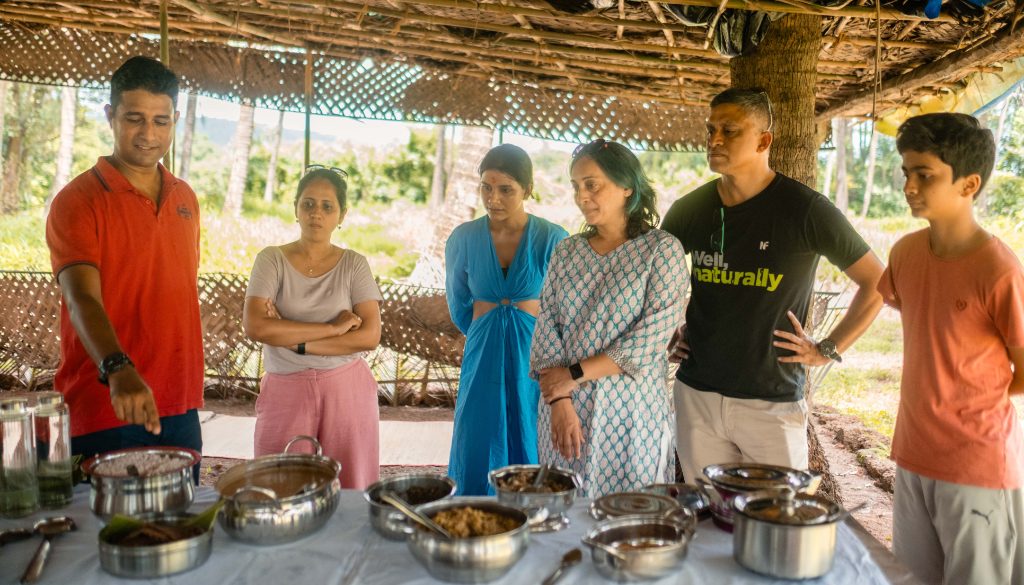
At Make It Happen, we invite you to explore the heart of Goa through its cuisine in the Latin Quarter Food Trail. Our monsoon food trails lead you beyond menus into homes, stories, and kitchens hidden behind flowering fences and old wooden gates.
You will meet hosts who’ve mastered the art of balchao, learn to grind spices the traditional way, and hear stories about dishes that appear only during certain months. These experiences are not just culinary activities—they represent moments of cultural exchange, intimacy, and discovery.
Whether you’re enjoying a traditional Goan breakfast after a village walk, sampling local drinks or learning how a forgotten recipe returned to a family kitchen, our trails are designed to connect you more deeply with Goa’s living food heritage.
In Every Bite, a Story
Tasting Goan food is tasting history, migration, memory, and love. During the rains, the flavors feel more vibrant, more rooted, more poetic. This monsoon, step into a Goa you may have never imagined—not noisy, not crowded, but rich with aroma, culture, and soul.
In Goa, every spice has a journey, every dish has a story, and every meal invites you to connect.
Join a food trail with Make It Happen and experience Goa—one unforgettable bite at a time.
Author
Sairaj Borkar