Traditional Food in Bangalore: A Journey Through the City’s Culinary Heritage
Bangalore is often celebrated for its thriving startup ecosystem, pleasant weather, and cosmopolitan culture. Yet, beyond its modern identity lies a rich culinary landscape shaped by centuries of migration, trade, community traditions, and local ingenuity. Exploring traditional food in Bangalore is one of the most rewarding ways to understand the city’s history and cultural evolution. Every neighbourhood, market, temple precinct, and old eatery has a story to tell through its food.
At Make It Happen, we believe that food is one of the most authentic gateways into a city’s soul. A plate of breakfast, a festive sweet, or a family recipe passed down through generations often reveals more about a place than any monument or museum. Bangalore’s food culture is a perfect example of how communities, traditions, and changing times come together to create something uniquely local.
Understanding Bangalore Through Its Food
The story of Bangalore’s cuisine begins long before the city became a global technology hub. Historically, Bangalore was an important administrative and trading centre under various rulers including the Gangas, Hoysalas, Vijayanagara kings, Wodeyars of Mysore, Hyder Ali, Tipu Sultan, and the British.
Each period brought new influences. Farmers from surrounding regions supplied grains and vegetables. Traders introduced ingredients and techniques. Communities migrating from Tamil Nadu, Andhra Pradesh, Maharashtra, and beyond added their own culinary traditions. The result was a food culture that remained deeply rooted in Karnataka while embracing diversity.
This layered history is reflected in the traditional food in Bangalore that continues to be enjoyed across homes, restaurants, and local markets.
The Importance of Breakfast Culture
Few cities in India take breakfast as seriously as Bangalore.
For generations, mornings have begun with simple yet satisfying meals that are nutritious, affordable, and deeply connected to local traditions. The city’s iconic breakfast culture emerged from old darshinis, tiffin rooms, and family-run establishments that focused on consistency rather than extravagance.
Bengaluru’s Traditional Idli: Simplicity Perfected Over Generations
Few dishes are as deeply woven into Bengaluru’s food culture as the humble idli. While idlis are enjoyed across South India, Bengaluru developed its own distinctive style over time. Traditional Bengaluru idlis are known for their soft, airy texture achieved through careful fermentation of rice and urad dal. Historically, preparing idlis was a labor-intensive process involving soaking, stone-grinding, fermenting overnight, and steaming in cloth-lined moulds.
The city’s legendary eateries helped elevate the idli from a household staple to a cultural icon. Served with coconut chutney, vegetable sambar, and often a dollop of fresh butter, the Bengaluru-style idli became synonymous with comfort, affordability, and consistency. For generations of residents, breakfast has begun with a plate of steaming idlis accompanied by strong South Indian filter coffee. The dish embodies the city’s appreciation for food that is simple yet crafted with precision and care.
Rava Idli: A Bengaluru Innovation Born from Necessity
Among Bengaluru’s most celebrated culinary contributions is the Rava Idli, a dish that emerged during a period of scarcity and went on to become a beloved classic. According to widely documented accounts, the dish was innovated during the Second World War when rice shortages made traditional idli preparation difficult. In response, cooks began using semolina (Rava) instead of rice, creating a completely new variation.
The resulting preparation combined roasted semolina, yogurt, spices, curry leaves, and cashews before being steamed into soft cakes. Unlike traditional idlis, rava idlis have a slightly grainy texture and a richer flavour profile. They are typically served with coconut chutney, vegetable sagu, and occasionally a touch of ghee.
What makes rava idli remarkable is that it demonstrates Bengaluru’s spirit of adaptation and innovation. A solution to a wartime challenge eventually became one of the city’s most famous culinary exports, enjoyed by millions across India and beyond.
The Art of Dosa Making in Bengaluru
The dosa occupies a special place in Bengaluru’s culinary heritage. More than just a breakfast dish, it represents a craft refined over generations. Traditional dosa batter is made by soaking rice and lentils separately, grinding them into a smooth mixture, and allowing natural fermentation to develop flavour and texture.
Bengaluru’s dosa culture is remarkably diverse. Local eateries serve everything from thin, crisp dosas to soft, thick variations depending on regional traditions and family recipes. Popular styles include set dosa, a fluffy and spongy preparation served in stacks of three, benne dosa, enriched with generous amounts of butter, and plain dosa, celebrated for its simplicity.
The preparation itself requires skill and experience. The temperature of the griddle, consistency of the batter, and timing of fermentation all influence the final result. In many traditional establishments, dosa-making remains an art passed down through generations, with each eatery developing its own signature style.
The Masala Dosa: Bengaluru’s Most Iconic Culinary Creation
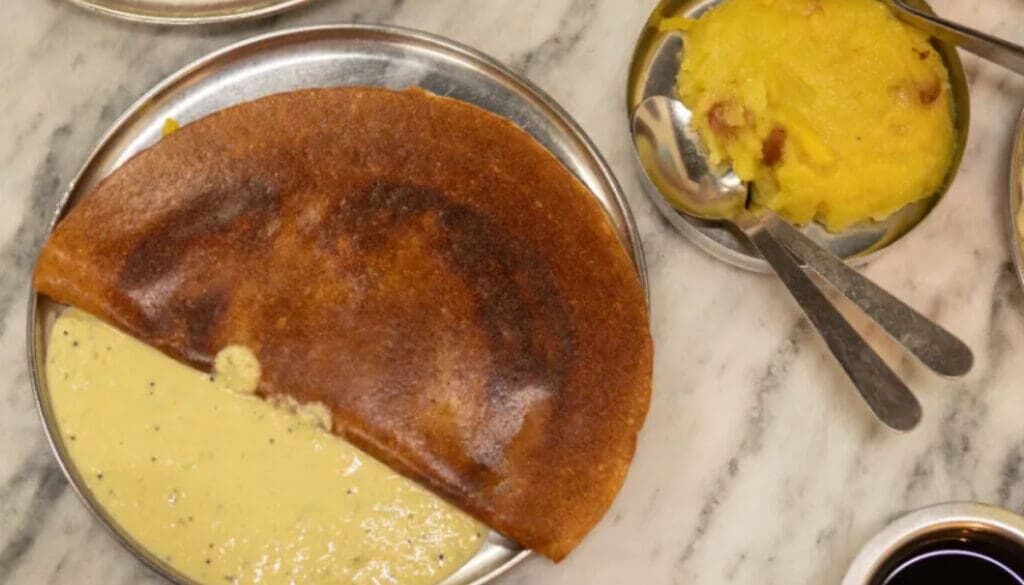
No discussion of traditional food in Bangalore is complete without mentioning the masala dosa, a dish that has become one of India’s most recognised culinary ambassadors. While various forms of dosa existed for centuries, the addition of a spiced potato filling transformed the dish into something extraordinary.
The Bengaluru-style masala dosa is distinguished by its crisp golden exterior, soft interior, and flavourful potato palya made with onions, mustard seeds, curry leaves, turmeric, and green chillies. Many traditional establishments enhance the experience with a layer of red chutney spread inside the dosa before folding it around the filling.
What makes the masala dosa particularly significant is its balance of textures and flavours. The crispness of the dosa, the warmth of the potato filling, the freshness of coconut chutney, and the comfort of sambar create a meal that is both satisfying and deeply rooted in local tradition.
Over time, Bengaluru’s dosa makers have continued to innovate, introducing countless variations while respecting the essence of the original. Yet for many residents and visitors alike, the classic masala dosa remains the ultimate expression of the city’s culinary heritage. It represents the ingenuity, adaptability, and attention to detail that define Bengaluru’s food culture and ensure its place among the most beloved dishes in India.
The Legacy of Mylari and Benne Dosa
While Mysuru is often associated with the famous Mylari dosa, Bangalore has enthusiastically embraced this style. The thick, soft texture and generous use of butter create a distinctive eating experience.
Similarly, benne dosa, known for its rich buttery flavour, has become increasingly popular across the city. These dishes highlight how regional Karnataka food traditions continue to influence Bangalore’s culinary landscape.
Rice: The Foundation of Everyday Meals
To understand traditional food in Bangalore, one must appreciate the central role of rice in everyday life.
Rice-based meals dominate household cooking and traditional eateries alike. The diversity of preparations reflects both practicality and creativity.
Bisi Bele Bath
One of Karnataka’s most iconic dishes, bisi bele bath combines rice, lentils, vegetables, tamarind, and a distinctive spice blend. Its name literally translates to “hot lentil rice.”
More than just a comfort food, bisi bele bath represents the resourcefulness of home cooking, bringing together multiple ingredients in a balanced and nutritious meal.
Vangi Bath and Puliyogare
Vangi bath, prepared with brinjal and aromatic spices, and puliyogare, a tangy tamarind rice dish, are staples at temples, family gatherings, and community events.
These dishes showcase how simple ingredients can be transformed into deeply satisfying meals through carefully preserved recipes.
The Influence of Temple Food Traditions
Many culinary traditions in Bangalore are closely linked to religious institutions and community gatherings.
Temples across Karnataka have long served as centres of food culture, where prasada and festival meals introduced generations to traditional flavours. Dishes such as pongal, sweet kesari bath, kosambari, and puliyogare continue to be associated with these sacred spaces.
The influence of temple cuisine can still be felt in many homes and traditional eateries throughout Bangalore.
Markets and Food Heritage
Food heritage is not confined to kitchens. It thrives in markets where ingredients, recipes, and culinary knowledge are exchanged daily.
The historic Krishnarajendra Market offers a fascinating glimpse into the ingredients that have shaped local cuisine for generations. Fresh vegetables, flowers, spices, lentils, and seasonal produce reveal the agricultural connections that sustain Bangalore’s food culture.
Walking through these markets provides valuable insight into how traditional recipes remain relevant in modern urban life.
Traditional Sweets of Bangalore
No exploration of traditional food in Bangalore is complete without mentioning its beloved sweets.
Mysore Pak
Though originating from Mysuru, Mysore Pak enjoys legendary status in Bangalore. Made from gram flour, sugar, and generous amounts of ghee, it remains a favourite during festivals and celebrations.
Obbattu (Holige)
Prepared during major festivals such as Ugadi and Ganesh Chaturthi, obbattu consists of a thin flatbread filled with sweet lentil or coconut stuffing. Families often gather to prepare it together, making it as much a cultural activity as a culinary one.
Kesari Bath
This fragrant semolina dessert flavoured with saffron, cardamom, and ghee frequently appears on breakfast menus across the city, often paired with khara bath in the popular “chow chow bath” combination.
Millets: The Ancient Grains of Bengaluru’s Culinary Heritage
Long before rice became the dominant staple, the communities around Bengaluru relied heavily on millets. The semi-arid climate of the Deccan Plateau made crops such as ragi (finger millet), jowar (sorghum), and navane (foxtail millet) more resilient and sustainable. Even today, millet-based dishes remain an important part of Karnataka’s food heritage and are increasingly appreciated for their nutritional value.
One of the most iconic dishes is ragi mudde, soft millet balls traditionally paired with lentil-based gravies, leafy green curries, or meat preparations. While often associated with rural Karnataka, ragi mudde continues to be enjoyed in many Bengaluru households. Other traditional millet preparations include ragi rotti, a savoury flatbread made with onions, green chillies, and herbs, as well as millet dosas and porridge-like preparations that have sustained generations of farming communities.
The growing interest in sustainable and healthy eating has brought these traditional grains back into the spotlight, making millet-based cuisine an important chapter in the story of Bangalore’s culinary heritage.
Avarekalu: Bengaluru’s Beloved Winter Ingredient
Few ingredients are as closely associated with Bengaluru’s food culture as Avarekalu (hyacinth beans). Every winter, the city eagerly awaits the avarekalu season, when markets overflow with freshly harvested beans and households begin preparing cherished family recipes.
The popularity of avarekalu is so significant that Bengaluru hosts the annual Avarekai Mela, a festival dedicated entirely to this humble legume. Traditional dishes include avarekalu saaru (a flavourful curry), avarekalu upma, avarekalu pulao, avarekalu dosa, and hitikida avarekalu, where the beans are hand-pressed to remove their outer skin before cooking.
For many residents, avarekalu is more than an ingredient; it is a seasonal tradition that brings families together. The arrival of avarekalu season often sparks conversations about recipes, memories, and the agricultural heritage of the region. Its enduring popularity highlights how local ingredients continue to shape the identity of traditional food in Bangalore.
Traditional Snacks and Street Food: A Blend of Karnataka and Maratha Influences
Bengaluru’s street food culture reflects centuries of cultural exchange, including influences from neighbouring Maharashtra and the Maratha presence that shaped parts of southern India between the 17th and 18th centuries. Trade routes, military movements, and migration brought communities together, resulting in culinary traditions that continue to thrive today.
One of the city’s most beloved snacks is Congress Kadlekai, a spicy roasted peanut preparation believed to have originated near political gatherings in Basavanagudi. Equally popular are Nippattu, crisp rice flour crackers flavoured with peanuts and spices, and Kodubale, crunchy ring-shaped snacks made from rice flour and lentils. These savouries are staples during festivals and family gatherings across Karnataka.
The Maratha influence can be seen in dishes and snacks that emphasize robust spice blends, gram flour preparations, and festive savouries. Traditional Maharashtrian communities that settled in Bengaluru contributed recipes such as Thalipeeth, Puran poli, and variations of spiced snacks that became part of the city’s wider culinary repertoire. Areas such as Malleshwaram and parts of the old Pete area historically housed Marathi-speaking communities whose food traditions enriched Bengaluru’s diverse food culture.
Street-side eateries and old snack shops continue to serve favourites such as Masala Mandakki, Churmuri, Maddur Vada, and Khara Mixtures, offering a glimpse into everyday food traditions that have remained remarkably unchanged for generations. These snacks may appear simple, but they represent the intersection of local ingredients, community traditions, and historical influences that define the city’s culinary identity.
Together, these millet dishes, avarekalu specialties, and traditional snacks demonstrate that Traditional food in Bangalore extends far beyond restaurant menus. It is deeply connected to agriculture, seasonality, migration, and the cultural exchanges that have shaped the city over centuries.
Preserving Culinary Heritage
As Bangalore continues to grow, preserving its food heritage becomes increasingly important. Historic eateries face redevelopment pressures. Family recipes risk being forgotten. Traditional cooking methods compete with modern convenience.
Yet there is also reason for optimism. Younger generations are showing renewed interest in regional cuisines, local ingredients, and community food traditions. Heritage walks, food festivals, and storytelling experiences are helping keep these culinary legacies alive.
Supporting local businesses, family-run establishments, and traditional food makers contributes directly to preserving this rich heritage.
A Taste of Bangalore’s Soul
The story of Bangalore cannot be fully understood through its landmarks alone. It is found in the aroma of freshly brewed filter coffee, the comfort of a plate of idli and vada, the festive sweetness of obbattu, and the bustling markets that supply ingredients to countless kitchens.
Exploring traditional food in Bangalore offers an opportunity to experience the city through its people, traditions, and everyday rituals. It reveals a side of Bangalore that is deeply rooted, culturally rich, and constantly evolving.
With Make It Happen, these culinary experiences become journeys of discovery. Every meal tells a story, every neighbourhood reveals a tradition, and every bite brings you closer to understanding the city beyond its modern image.
Because in Bangalore, food is not just nourishment. It is memory, identity, community, and heritage served on a plate.